


Head Restraints
* Some models.
Head restraints are intended to help protect you and the passengers from neck injury.
WARNING:
Always drive with the head restraints
installed when seats are being used
and make sure they are properly
adjusted:
Driving with the head restraints
adjusted too low or removed is
dangerous. With no support behind
your head, your neck could be
seriously injured in a collision.
Height adjustment
To raise a head restraint, pull it up to the desired position.
To lower the head restraint, press the stopcatch release, then push the head restraint down.
Adjust the head restraint so that the top is even with the top of the passenger's ears, never the passenger's neck to prevent injury.
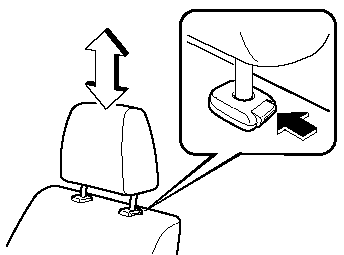
Front seat
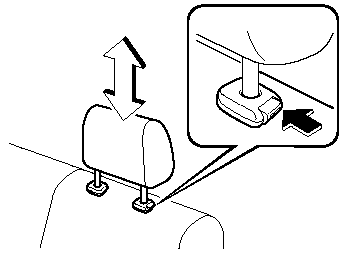
Rear seat
Removal/Installation
To remove the head restraint, pull it up while pressing the stop-catch.
To install the head restraint, press the uprights into the holes while pressing the stop-catch.
WARNING:
Always drive with the head restraints
set up when seats are being used and
make sure they are properly set up:
Driving with the head restraints not
set up is dangerous. With no support
behind your head, your neck could be
seriously injured in a collision.
See also:
Interior Care
qDashboard Precautions
Prevent caustic solutions such as perfume
and cosmetic oils from contacting the
dashboard. They'll damage and discolor it.
If these solutions get on the dashboard,
wipe the ...
Everyday Driving Fun
The rear-wheel-drive Miata is one of those cars where you don't have to break
any speed limits to have a lot of fun. Driving 55 mph in the Miata is comparable
to going 110 mph in, say, a BMW M3 — ...
Customer Assistance (Puerto Rico)
Your complete and permanent satisfaction is our business. That is why all
Authorized
Mazda Dealers have the knowledge and the tools to keep your Mazda vehicle in top
condition.
If you have any qu ...