


Scheduled Maintenance (USA, Canada, and Puerto Rico)
Follow Schedule 1 if the vehicle is operated mainly where none of the
following conditions
apply.
- Repeated short-distance driving.
- Driving in dusty conditions.
- Driving with extended use of brakes.
- Driving in areas where salt or other corrosive materials are used.
- Driving on rough or muddy roads.
- Extended periods of idling or low-speed operation.
- Driving for long periods in cold temperatures or extremely humid climates.
- Driving in extremely hot conditions.
- Driving in mountainous conditions continually.
If any do apply, follow Schedule 2 (Canada and Puerto Rico residents follow Schedule 2).
NOTE:
After the prescribed period, continue to follow the described maintenance at the
recommended
intervals.
Schedule 1
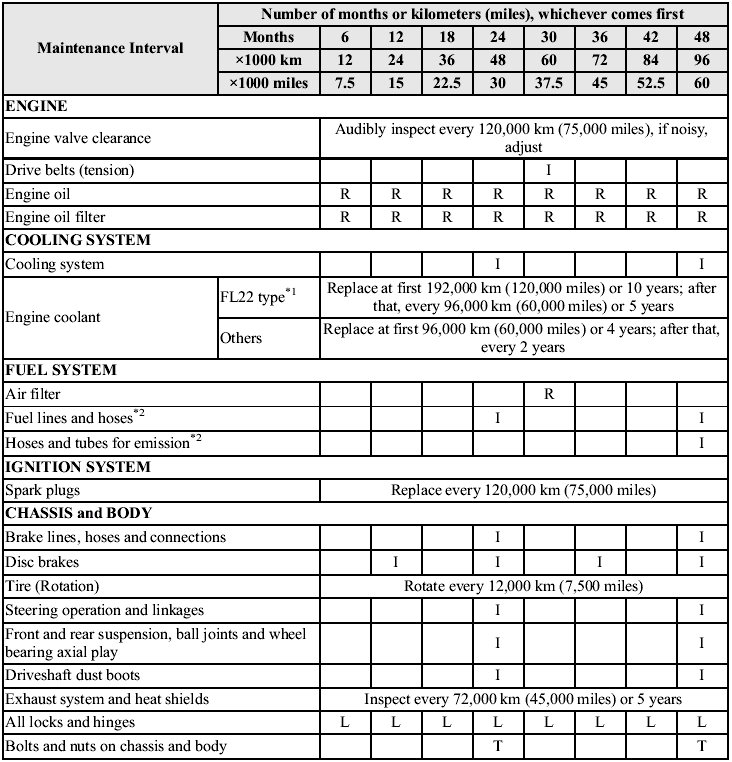

Chart symbols:
I: Inspect: Inspect and clean, repair, adjust, fill up, or replace if necessary.
R: Replace.
L: Lubricate.
T: Tighten.
Remarks:
*1 Use FL22 type coolant in vehicles with the inscription “FL22” on the radiator cap itself or the surrounding area. Use FL22 when replacing the coolant.
*2 According to state/provincial and federal regulations, failure to perform maintenance on these items will not void your emissions warranties. However, Mazda recommends that all maintenance services be performed at the recommended time or mileage/kilometer period to ensure long-term reliability.
Schedule 2
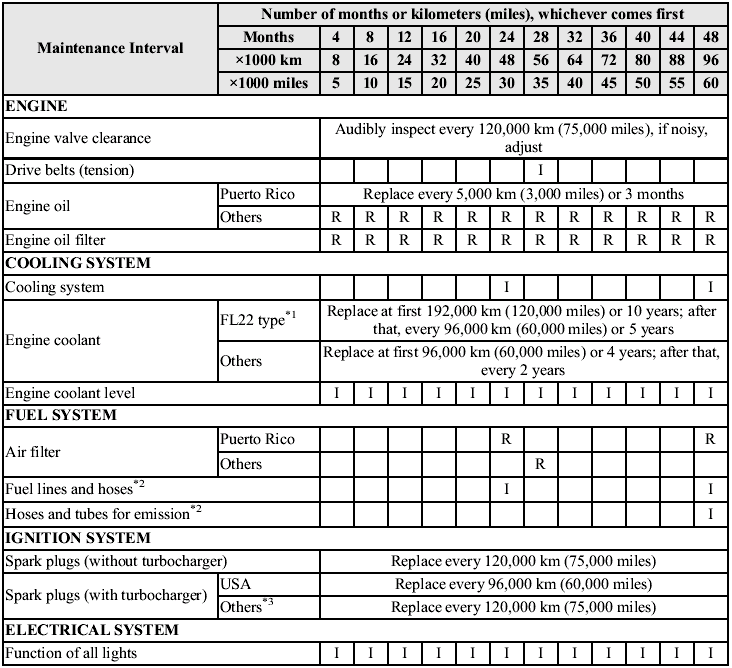
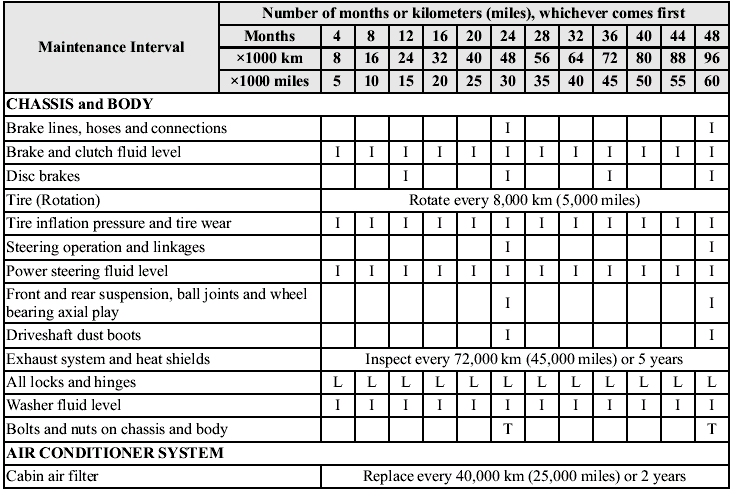
Chart symbols:
I: Inspect: Inspect and clean, repair, adjust, fill up, or replace if necessary.
R: Replace.
L: Lubricate.
T: Tighten.
Remarks:
*1 Use FL22 type coolant in vehicles with the inscription “FL22” on the radiator cap itself or the surrounding area. Use FL22 when replacing the coolant.
*2 According to state/provincial and federal regulations, failure to perform maintenance on these items will not void your emissions warranties. However, Mazda recommends that all maintenance services be performed at the recommended time or mileage/kilometer period to ensure long-term reliability.
*3 If the vehicle is operated primarily under any of the following conditions, replace the spark plugs at every 96,000 km (60,000 miles) or shorter.
a) Repeated short-distance driving.
b) Extended periods of idling or low-speed operation.
c) Driving for long periods in cold temperatures or extremely humid climates.
See also:
Overview
The original Mazda 5 introduced new attributes to the compact multi-activity
vehicle (C-MAV) segment in Europe in 2005, with the segment's only double sliding
doors and innovative Karakuri sea ...
Interior
Compared with the old 626, the Mazda6's wider body translates into extra
space for five occupants. The driver's seat adjusts through a 9.4-inch range,
and the 60/40-split rear seatback folds down. ...
Installing a Child-Restraint System
The passenger lap/shoulder belt can easily
be converted into the automatic locking
mode, which must be done to hold the
child-restraint system.
Some child-restraint systems also employ
specially ...