


Tiedown Hooks
CAUTION:
Don't use the tiedown hooks under
the front and rear for towing.
They are designed ONLY for tying down the vehicle when it's being transported. Using them for towing will damage the bumper.
Tiedown Hooks
1. Remove the tiedown eyelet, lug wrench, and jack lever from the trunk.
2. Wrap the jack lever with a soft cloth to prevent damage to a painted bumper, and open the cap located on the front or rear bumper.
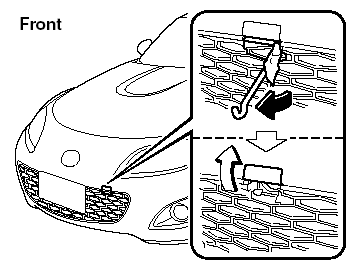
Type A
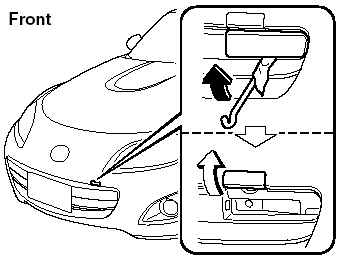
Type B
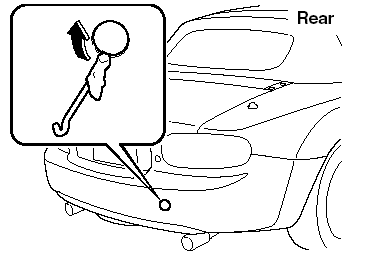
CAUTION:
 Do not use excessive force as it
may damage the cap or scratch
the painted bumper surface.
The rear bumper cover cannot be
removed completely. Attempting
to forcefully remove the rear
bumper cover could result in it
being damaged.
NOTE:
Remove the front bumper cover completely and
store it so as not to lose it.
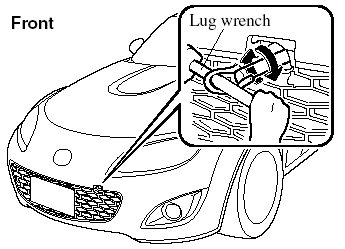
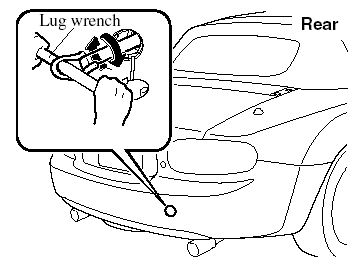
3. Securely install the tiedown eyelet using the lug wrench.
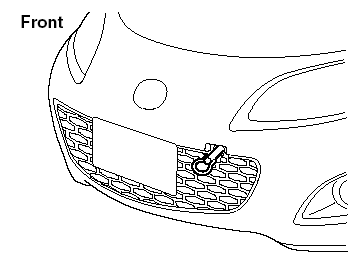
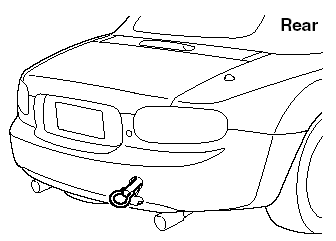
CAUTION:
If the tiedown eyelet is not securely
tightened, it may loosen or
disengage from the bumper when
tying down the vehicle. Make sure
that the tiedown eyelet is securely
tightened to the bumper.
Front tiedown hook is designed
only for towing, and lashing at
oversea transportation. Do not use
front tiedown hook for other use
(truck/railway transportation etc).
See also:
Engines
The new Mazda Tribute retains the 3.0-litre petrol V6 engine, which delivers
superior engine performance and smooth engine operation.
New to the line up is a 2.3-litre 110 kW/150 PS MZR petrol, rep ...
Registering Your Vehicle in A Foreign Country (Except United States and
Canada)
Government regulations in your country could require that automobiles meet
specific
emission and safety standards.
Vehicles built for your country may differ from those built for other countries. ...
Interior
Up to five people can fit inside the Mazda3. The steering column tilts and
telescopes, and the instruments sit in a trio of round, recessed nacelles. A
ratchet-type mechanism permits seat adjustme ...