


Seat Belt (Except Center-Rear Position)
NOTE:
When using the center-rear seat belt, refer to
“Center-Rear Position Seat Belt”.
Fastening the Seat Belt
1. Grasp the tongue.
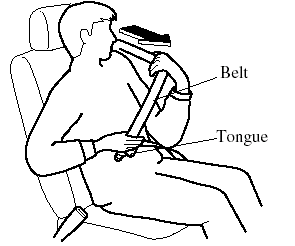
2. Slowly pull out the lap/shoulder belt.
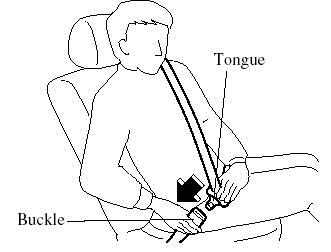
3. Insert the tongue into the buckle until you hear a click.
WARNING:
Positioning the Shoulder Portion of the
Seat Belt:
Improper positioning of the shoulder
portion of the seat belt is dangerous.
Always make sure the shoulder portion of the seat belt is positioned across your shoulder and near your neck, but never under your arm, on your neck, or on your upper arm.
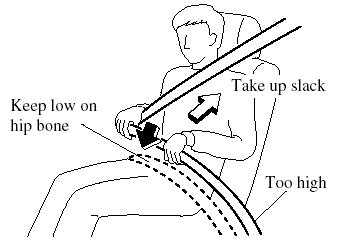
4. Position the lap belt as low as possible, not on the abdominal area, then adjust the shoulder belt so that it fits snugly against your body.
WARNING:
Positioning the Lap Portion of the Seat
Belt:
The lap portion of the seat belt worn
too high is dangerous. In a collision,
this would concentrate the impact
force directly on the abdominal area,
causing serious injury. Wear the lap
portion of the belt snugly and as low
as possible.
Unfastening the Seat Belt
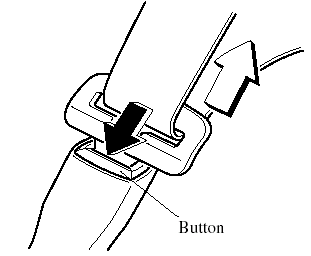
Depress the button on the buckle. If the belt does not fully retract, pull it out and check for kinks or twists. Then make sure it remains untwisted as it retracts.
NOTE:
If a belt does not fully retract, inspect it for
kinks and twists. If it is still not retracting
properly, have it inspected at an Authorized
Mazda Dealer.
Shoulder Belt Adjuster
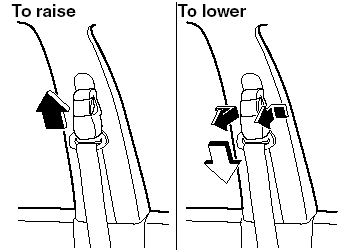
Adjust the height of the shoulder belt if the seat belt touches your neck, or if it crosses your arm instead of your shoulder.
To raise the shoulder belt adjuster, push the adjuster up. To lower the shoulder belt adjuster, pull the adjuster and slide it down. Make sure the adjuster is locked.
WARNING:
Positioning the Shoulder Portion of the
Seat Belt:
Improper positioning of the shoulder
portion of the seat belt is dangerous.
Always make sure the shoulder portion of the seat belt is positioned across your shoulder and near your neck, but never under your arm, on your neck, or on your upper arm.
See also:
Tiedown Hook
CAUTION:
Don't use the tiedown hook under
the rear for towing.
It is designed ONLY for tying down
the vehicle when it's being
transported. Using it for towing will
damage the bumper.
Tiedown Ho ...
Safety
In Insurance Institute for Highway Safety crash tests, the CX-9 earned the
top score, Good, in frontal and side-impact tests. It hasn't been tested for
rear impacts or for roof strength, an indica ...
Flat Tire
Either run-flat tires or conventional tires
are equipped on your Mazda depending
on the specification, therefore the
procedure for repairing a flat tire differs
depending on the type of tire. Befo ...