


Uniform Tire Quality Grading System (UTQGS)
This information relates to the tire grading system developed by the U.S.
National
Highway Traffic Safety Administration for grading tires by tread wear, traction,
and
temperature performance.
TreadWear
The tread wear grade is a comparative rating based on the wear rate of the
tire when tested
under controlled conditions on a specified government test course.
For example, a tire graded 150 would wear one-and-a-half times as well on the
government
course as a tire graded 100.
The relative performance of tires depends upon the actual conditions of their
use, however,
and may depart significantly from the norm because of variations in driving
habits, service
practices and differences in road characteristics and climate.
Traction-AA, A, B, C
The traction grades, from highest to lowest, are AA, A, B, and C. These
grades represent
the tire's ability to stop on wet pavement as measured under controlled
conditions on
specified government test surfaces of asphalt and concrete. A tire marked C may
have poor
traction performance.
WARNING:
The traction grade assigned to this tire is based on braking (straight ahead)
traction
tests and does not include acceleration cornering (turning), hydroplaning, or
peak
traction characteristics.
Temperature-A, B, C
The temperature grades A (the highest), B, and C, represent the tire's
resistance to the
generation of heat and its ability to dissipate heat when tested under
controlled conditions
on a specified indoor laboratory test wheel.
Sustained high temperature can cause the material of the tire to degenerate and
reduce tire
life, and excessive temperatures can lead to sudden tire failure.
Grade C corresponds to a level of performance which all passenger vehicle tires
must meet
under the Federal Motor Vehicle Safety Standard No. 109. Grades B and A
represent
higher levels of performance on the laboratory test wheel than the minimum
required by
law.
WARNING:
Keep your vehicle's tires properly inflated and not overloaded:
Driving with improperly inflated or overloaded tires is dangerous. Excessive
speed,
underinflation, or excessive loading, either separately or in combination, can
cause
heat buildup and possible tire failure. The temperature grade for this tire is
established for a tire that is properly inflated and not overloaded.
These grades will be added to the sidewalls of passenger vehicle tires over
the next several
years according to a schedule established by the NHTSA and the tire
manufacturers.
The grade of tires available as standard or optional equipment on Mazda vehicles
may vary
with respect to grade.
ALL PASSENGER VEHICLE TIRES MUST CONFORM TO THESE GRADES AND TO ALL OTHER FEDERAL TIRE-SAFETY REQUIREMENTS.
Uniform Tire Quality Grading
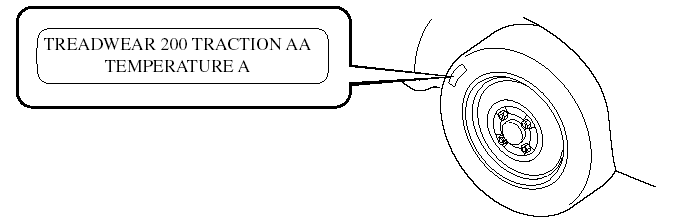
Quality grades can be found where applicable on the tire sidewall between
tread shoulder
and maximum section width.
For example:
Treadwear 200 Traction AA Temperature A
See also:
Service Publications
Factory-authorized Mazda service publications are available for owners who
wish to do
some of their own maintenance and repair.
When requesting any of our publications through an Authorized Mazda ...
Vehicle Loading
WARNING:
Do not tow a trailer with this vehicle:
Towing a trailer with this vehicle is dangerous because it has not been designed
to
tow a trailer and doing so will affect the drive system which ...
Windshield Wipers
Turn the wipers on by pulling the lever
down.
INT ― Intermittent
LO ― Low speed
HI ― High speed
For a single wiping cycle, push the lever
up to MIST.
MIST ― Mist
Wind ...