


Brake/Clutch Fluid
Inspecting Brake/Clutch Fluid Level
The brakes and clutch draw fluid from the same reservoir.
Inspect the fluid level in the reservoir regularly. It should be kept at MAX.
The level normally drops with accumulated distance, a condition associated with wear of brake and clutch linings. If it is excessively low, have the brake/clutch system inspected by an Authorized Mazda Dealer.
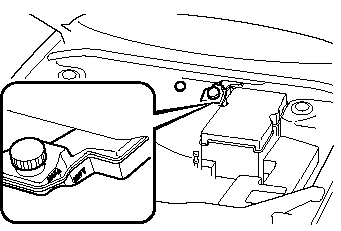
Without turbocharger
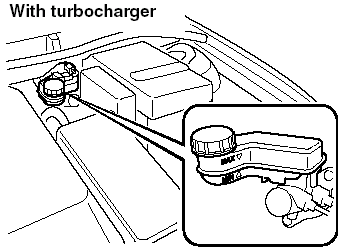
With turbocharger
Adding Brake/Clutch Fluid
WARNING:
Be careful not to spill brake fluid on
yourself or on the engine:
Spilled brake fluid is dangerous. If it
gets in your eyes, they could be
seriously injured. If this happens,
immediately flush your eyes with
water and get medical attention.
Brake fluid spilled on a hot engine could cause a fire.
If the brake/clutch fluid level is low, have the brakes and clutch inspected: Low brake/clutch fluid levels are dangerous. Low levels could signal brake lining wear or a brake system leak. Your brakes could fail and cause an accident.
If the fluid level is low, add fluid until it reaches MAX.
Before adding fluid, thoroughly clean the area around the cap.
CAUTION:
 Brake and clutch fluid will
damage painted surfaces. If brake
or clutch fluid does get on a
painted surface, wash it off with
water immediately.
Using nonspecified brake and
clutch fluids will
damage the systems. Mixing
different fluids will also damage
them.
If the brake/clutch system frequently requires new fluid, consult an Authorized Mazda Dealer.
See also:
Specifications
Engine
Electrical System
*1 ex factory
CAUTION.
When cleaning the iridium plugs, do not use a wire brush. The fine particulate
coating on the iridium alloy and platinum tips could be damaged. ...
The Inside
Because of its preproduction status, Mazda warned that there might be some
imperfect trim pieces in the cabin, but our CX-9 held up well to our scrutiny.
Sport models have cloth seats, and the fir ...
Safety Certification
FCC ID: CB2MBLUEC07 IC:279BMBLUEC07.
This device complies with Part 15 of the
FCC Rules and with RSS-210 of Industry
Canada. Operation is subject to the
following two conditions:
(1) This device ...