


Head Restraints
Your vehicle is equipped with head restraints in all seating positions except the Rear center seat to protect you and other passengers from neck injury.
WARNING:
Always drive with the head restraints
installed when seats are being used
and make sure they are properly
adjusted:
Driving with the head restraints
adjusted too low or removed is
dangerous. With no support behind
your head, your neck could be
seriously injured in a collision.
Height adjustment
To raise a head restraint, pull it up to the desired position.
To lower the head restraint, press the stopcatch release, then push the head restraint down.
Adjust the head restraint so that the top is even with the top of the passenger's ears, never the passenger's neck to prevent injury.
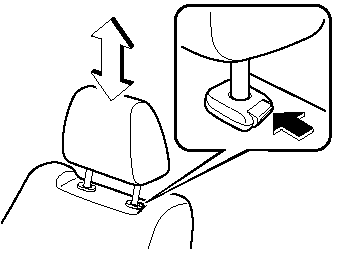
Front seat
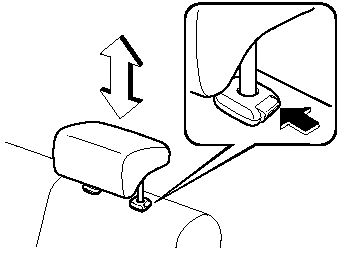
Rear seat
Removal/Installation
To remove the head restraint, pull it up while pressing the stop-catch.
To install the head restraint, press the uprights into the holes while pressing the stop-catch.
WARNING:
Always drive with the head restraints
set up when seats are being used and
make sure they are properly set up:
Driving with the head restraints not
set up is dangerous. With no support
behind your head, your neck could be
seriously injured in a collision.
See also:
Cruise Control
* Some models.
With cruise control, you can set and
automatically maintain any speed of more
than about 30 km/h (19 mph).
WARNING:
Do not use the cruise control under the
following conditions:
...
Location of the Tire Label (Placard)
You will find the tire label containing tire inflation pressure by tire size
and other important
information on the driver's side B-pillar or on the edge of the driver's door
frame.
SAMPLE
Re ...
Head Restraints
* Some models.
Head restraints are intended to help
protect you and the passengers from neck
injury.
WARNING:
Always drive with the head restraints
installed when seats are being used
and make ...