


Fuel-Filler Lid and Cap
WARNING:
When removing the fuel cap, loosen the
cap slightly and wait for any hissing to
stop. Then remove it:
Fuel spray is dangerous. Fuel can
burn skin and eyes and cause illness
if ingested. Fuel spray is released
when there is pressure in the fuel
tank and the fuel cap is removed too
quickly.
Before refueling, stop the engine, and
always keep sparks and flames away
from the filler neck:
Fuel vapor is dangerous. It could be
ignited by sparks or flames causing
serious burns and injuries.
Additionally, use of the incorrect fuel filler cap or not using a fuel filler cap may result in fuel leak, which could result in serious burns or death in an accident.
CAUTION:
Always use only a genuine Mazda
fuel cap or an approved equivalent,
available at an Authorized Mazda
Dealer. The wrong cap can result in a
serious malfunction of the fuel and
emission control systems. It may also
cause the check engine light in the
instrument cluster to illuminate.
Fuel-Filler Lid
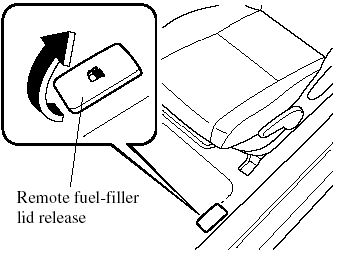
To open, pull up the remote fuel-filler lid release.
Fuel-Filler Cap
To remove the fuel-filler cap, turn it counterclockwise.
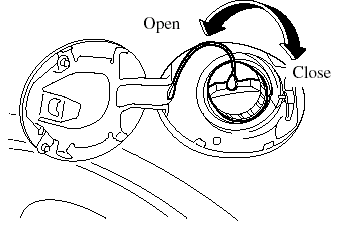
To close the fuel-filler cap, turn it clockwise until two or more clicks are heard.
CAUTION:
Make sure the fuel-filler cap is
tightened securely. The check engine
light may illuminate when the cap
isn't tightened securely. If the light
remains on (even after you have
tightened the cap securely, driven,
and restarted the engine several
times), it may indicate a different
problem. Contact an Authorized
Mazda Dealer as soon as possible.
See also:
Interior Equipment (View B)
1 Audio control switch.
2 SRS air bags.
3 Cruise control switch.
4 Audio system.
5 Hazard warning flasher switch.
6 Climate control system.
7 Parking brake.
8 Seat warmer switches .
9 Power ...
Warning and Beep Sounds
System Malfunction Warning Beep
If any malfunction occurs in the advanced
keyless function, the KEY warning light
(red) in the instrument cluster illuminates
continuously and beep sounds will be
...
Customer Assistance (Canada)
Satisfaction Review Process
Your complete and permanent satisfaction is of primary concern to Mazda. All
Authorized
Mazda Dealers have both the knowledge and tools to keep your Mazda in top
cond ...