


Automatic transaxle Fluid (ATF)
Inspecting Automatic transaxle Fluid Level
The automatic transaxle fluid level should be inspected regularly. Measure it as described below.
CAUTION.
 Always check the automatic
transaxle fluid level according to
the following procedure. If the
procedure is not done correctly,
the automatic transaxle fluid level
cannot be measured accurately
which could lead to automatic
transaxle damage.
A low fluid level can cause
transaxle slippage. Overfilling can
cause foaming, loss of fluid, and
transaxle malfunction.
Use only the specified fluid. A nonspecified
fluid could result in
transaxle malfunction and failure.
1. Park on a level surface and set the parking brake firmly.
2. Make sure there is no ATF leakage from the ATF hose or the housing.
3. Shift the shift lever to the park position (P), start the engine and warm it up.
CAUTION.
Do not shift the shift lever while the engine is warming up. If the ATF level is extremely low, the automatic transaxle could be damaged.
4. While the engine is still idling, pull out the dipstick and wipe it clean, and then put it back.
5. Check the ATF level. If there is no ATF adhering 5 mm from the end of the dipstick, add ATF.
CAUTION.
If there is no ATF adhering to the dipstick even after the engine has been warmed up, do not drive the vehicle. Otherwise, the automatic transaxle could be damaged.
6. Shift the shift lever to each range and position, and make sure there is no abnormality.
7. Drive the vehicle on city roads for 5 km (3.1 mile) or more.
8. Park on a level surface and set the parking brake firmly.
9. Shift the shift lever to the park position (P), check the ATF level while the engine is idling, and make sure that the ATF level is within the proper level. If the ATF level is not within the proper level, add ATF.
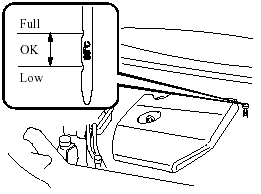
The proper fluid level is marked on the dipstick as follows.
See also:
Functionality, Comfort & Equipment - Quieter and more Practical
Mazda 5 facelift retains all interior features that have made it so popular with
families around the globe. Still onboard are its innovative Karakuri seating and
storage system (see box), 45 stora ...
Operating Tips for Audio System
WARNING:
Do not adjust the audio control
switches while driving the vehicle:
Adjusting the audio while driving the
vehicle is dangerous as it could
distract your attention from the
vehicle opera ...
Exterior
Comparatively upright in profile, the Mazda3 is built with a wide track and a
relatively long (103.9-inch) wheelbase for its size. A Sport Package that
includes sport bumpers, side skirts, 17-inch ...