


Scheduled Maintenance (USA, Canada, and Puerto Rico)
Follow Schedule 1 if the vehicle is operated mainly where none of the
following conditions
apply.
- Repeated short-distance driving.
- Driving in dusty conditions.
- Driving with extended use of brakes.
- Driving in areas where salt or other corrosive materials are used.
- Driving on rough or muddy roads.
- Extended periods of idling or low-speed operation.
- Driving for long periods in cold temperatures or extremely humid climates.
- Driving in extremely hot conditions.
- Driving in mountainous conditions continually.
If any do apply, follow Schedule 2 (Canada and Puerto Rico residents follow Schedule 2).
NOTE:
After the prescribed period, continue to follow the described maintenance at the
recommended
intervals.
Schedule 1
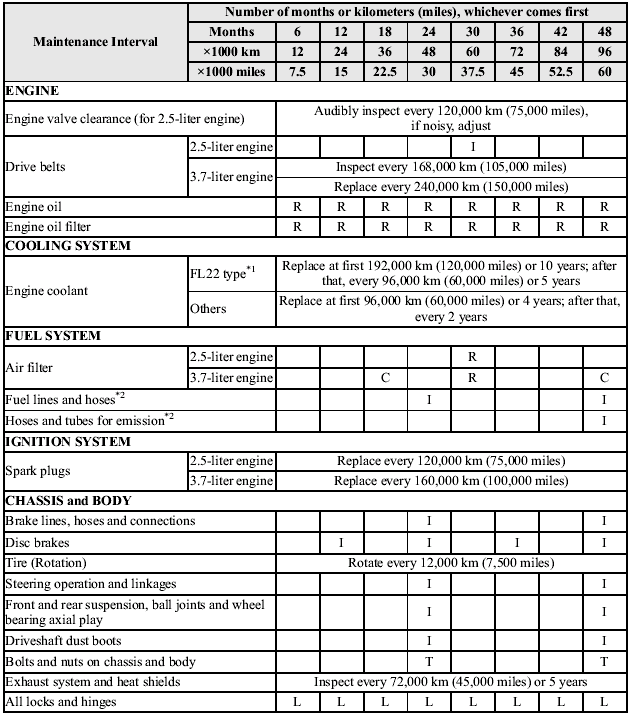

Chart symbols:
I: Inspect: Inspect and clean, repair, adjust, fill up, or replace if necessary.
R: Replace.
C: Clean.
L: Lubricate.
T: Tighten.
Remarks:
*1 Use FL22 type coolant in vehicles with the inscription “FL22” on the radiator cap itself or the surrounding area. Use FL22 when replacing the coolant.
*2 According to state/provincial and federal regulations, failure to perform maintenance on these items will not void your emissions warranties. However, Mazda recommends that all maintenance services be performed at the recommended time or mileage/kilometer period to ensure long-term reliability.
Schedule 2
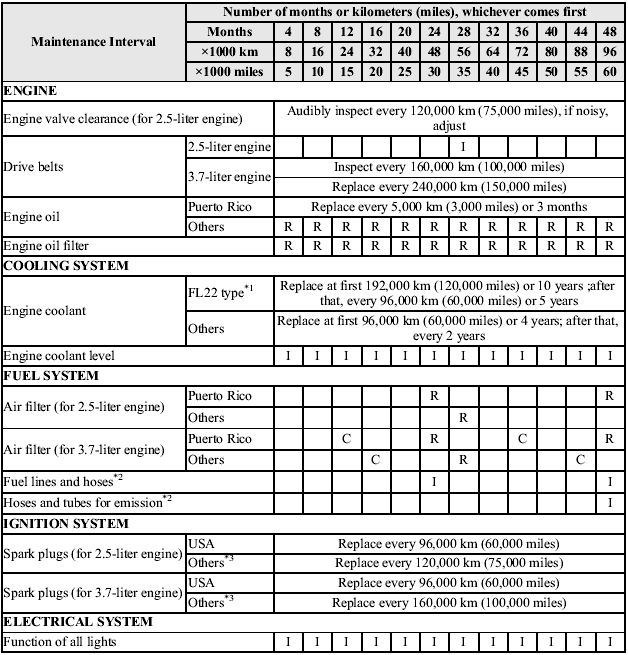
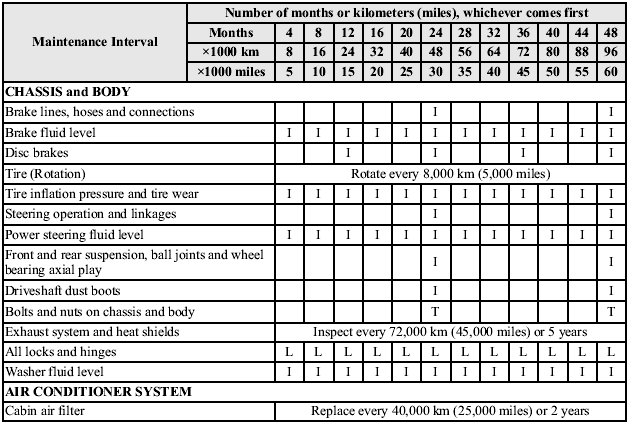
Chart symbols:
I: Inspect: Inspect and clean, repair, adjust, fill up, or replace if necessary.
R: Replace.
C: Clean.
L: Lubricate.
T: Tighten.
Remarks:
*1 Use FL22 type coolant in vehicles with the inscription “FL22” on the radiator cap itself or the surrounding area. Use FL22 when replacing the coolant.
*2 According to state/provincial and federal regulations, failure to perform maintenance on these items will not void your emissions warranties. However, Mazda recommends that all maintenance services be performed at the recommended time or mileage/kilometer period to ensure long-term reliability.
*3 If the vehicle is operated primarily under any of the following conditions, replace the spark plugs at every 96,000 km (60,000 miles) or shorter.
a) Repeated short-distance driving.
b) Extended periods of idling or low-speed operation.
c) Driving for long periods in cold temperatures or extremely humid climates.
See also:
Exterior Care
Follow all label and container directions
when using a chemical cleaner or polish.
Read all warnings and cautions.
Maintaining the Finish
Washing
CAUTION:
When the wiper lever is in the AUTO
po ...
Exterior
The CX-9 has sleeker lines and a sportier look than most crossovers,
especially large three-row ones.
* New designs for 18- and 20-inch wheels
* Chrome door handles and turn-signal side mirrors ( ...
Starting the Engine
With advanced key
Refer to “Starting the engine”
for information on how to start the engine.
NOTE:
Engine-starting is controlled by the spark
ignition system.
This system meets all Canadian Inte ...